Guide
RAINWATER TANK RULES IN WESTERN AUSTRALIA
A general picture of what usually applies, and a clear instruction to confirm the detail with your own shire.
Short answer
What rules apply to rainwater tanks in Western Australia?
Requirements vary by local government. In general, larger or structural tanks need building approval, tanks connected to household plumbing must not cross connect with scheme water, drinking water tanks need screened inlets and a sealed hatch, and all tanks must be mosquito proof. Confirm the detail with your shire.
Important
Read this part first
This guide is general information, not legal or regulatory advice. Requirements for rainwater tanks in Western Australia are set by a mix of state building rules, health rules, plumbing rules and your own local government. They are not identical from shire to shire, and they change.
Always confirm with your local shire
Before you install, replace or relocate a tank, contact your local government and ask two direct questions: does this tank need approval, and does this installation need a licensed plumber.
We deliberately do not quote regulation numbers or clause references on this page. Doing so would give you false confidence in a figure that may be out of date or may not apply to your shire. Your shire will tell you what applies to your address in a single phone call, and that answer is worth more than anything written here.
The same applies to bushfire prone areas, heritage listed properties and building envelopes, where extra requirements often apply.
When approval is usually needed
As a general pattern across WA, approval is more likely to be required when: - The tank is large, tall or holds a substantial volume - The tank is a structure in its own right, on a slab or a stand - The tank is close to a boundary or in front of the building line - The tank is connected to household plumbing rather than garden use only - The property is in a special control area or a bushfire prone area
Small garden tanks connected only to a hose are often exempt, but you should still ask. Exemption criteria differ between shires.
Drinking water from a rainwater tank
If the tank supplies drinking water, water quality becomes the main issue rather than the tank itself.
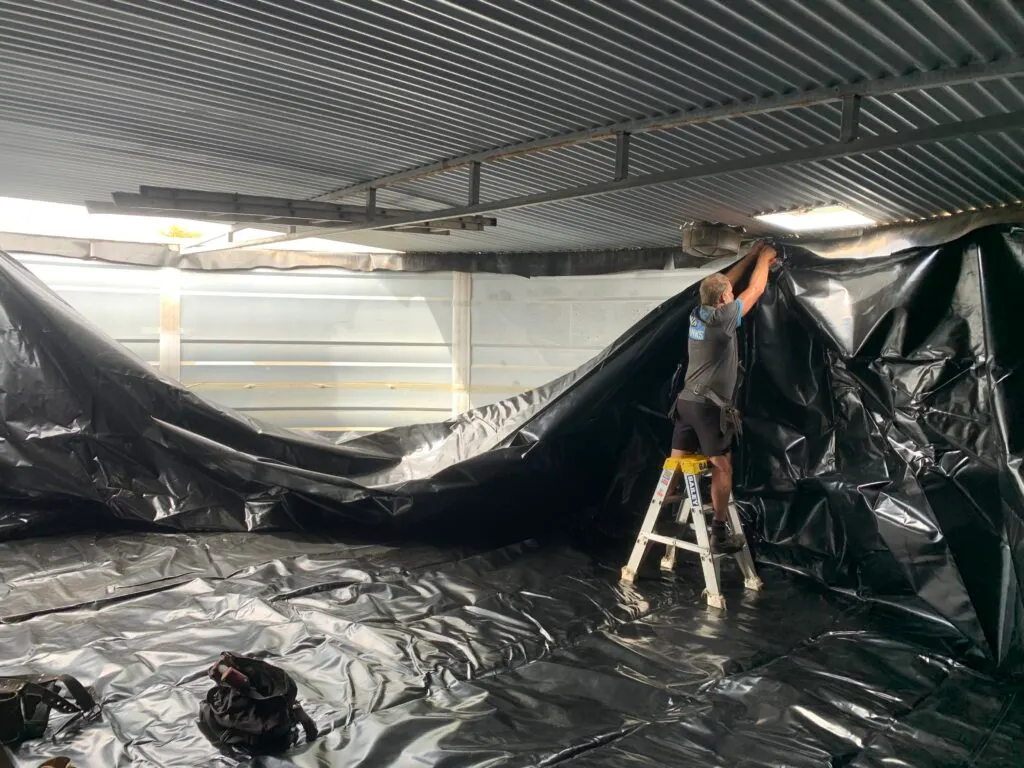
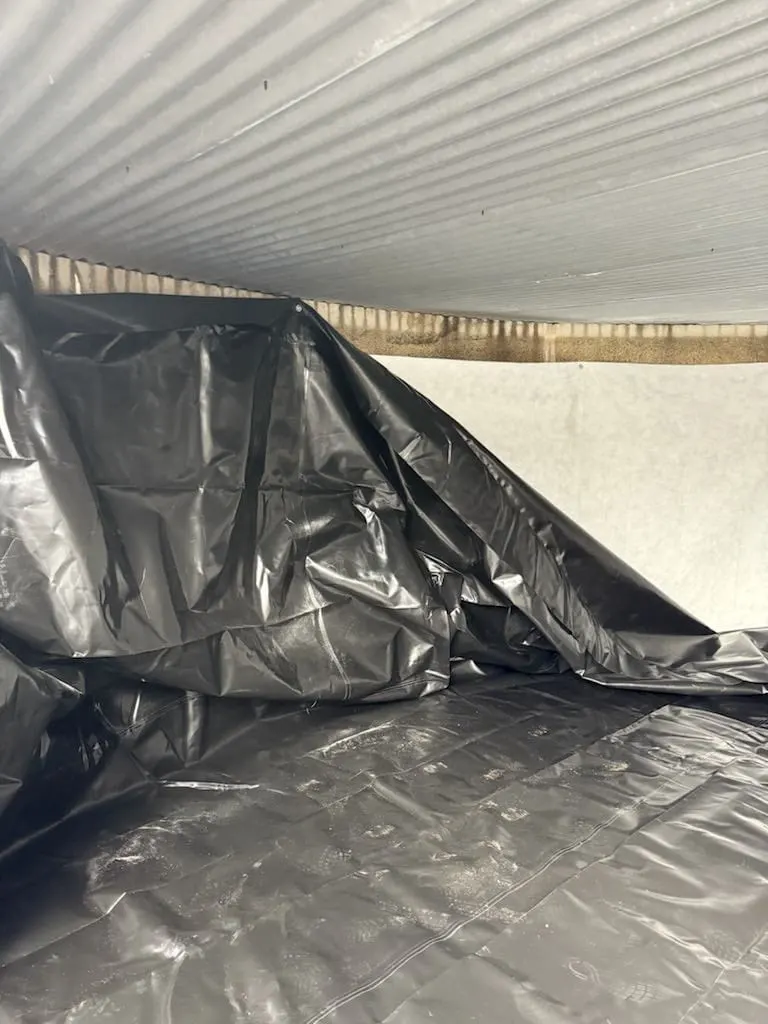
What generally applies: - The catchment roof should be free of lead based paint, tar based coatings and heavy contamination - Inlets should be screened, and a first flush diverter is widely recommended - The tank should be sealed against light, which is what causes algae growth - The liner should be a potable grade material - Overhanging trees, and the birds and debris they bring, should be managed - The tank should be inspected and cleaned periodically
The WA Department of Health publishes public guidance on private drinking water supplies, and it is the right source to read on water quality. If in doubt, have the water tested.
Mosquito control
This one is consistent everywhere. A rainwater tank must not become a mosquito breeding site.
In practice that means insect proof mesh on every opening: the inlet, the vent and the overflow. The hatch must have a lid that closes and seals. Mesh must be intact, not torn or rusted out.
It is a small, cheap job and it is one of the things local health officers do check. We fit mesh as standard on new installs and we can retrofit it on an existing tank on any visit.
Cross connection with scheme water
If your property has both a rainwater tank and a scheme water connection, the two supplies must not be able to mix. Backflow from a private tank into the public supply is taken seriously by water authorities.
This is licensed plumbing work. Whether a tank can be plumbed into household fixtures, and what backflow prevention is required, is a question for a licensed plumber and for your water authority, not for a tank supplier.
Overflow and stormwater
A tank overflows in a wet winter and that water has to go somewhere sensible. Most shires care about where it discharges, particularly on sloping blocks, near boundaries and near watercourses.
Discharging overflow onto a neighbouring property or into a septic disposal area causes real problems. Plan the overflow route when you plan the tank position, not afterwards.
Firefighting water supply
In bushfire prone areas, a dedicated firefighting water supply is often required or strongly recommended, with specific fitting types so a fire appliance can connect to it.
The requirements here are specific and local. Ask your shire and your local brigade what fitting standard and what volume they expect, and make sure the supply is still available at the end of summer rather than only in July.
What we can and cannot tell you
We can tell you what a tank needs mechanically: the base, the liner grade, the roof, the hatch, the mesh and the fittings. We do that every day and we will put it in writing on your quote.
We are not the right people to tell you whether your shire requires a building permit for your particular tank at your particular address. Ask them. It is a free phone call and it protects you.
WA rainwater tanks
COMMON QUESTIONS
Still stuck? Call 0499 142 149.
It depends on the size, the position and your local government. Larger and structural tanks usually do. Confirm with your shire before you order anything.
Many WA households do. It needs a clean catchment roof, screened inlets, a sealed light proof tank, a potable grade liner and periodic cleaning. The WA Department of Health publishes guidance on private supplies.
Mosquito proofing is expected everywhere. Fit intact mesh to the inlet, vent and overflow, and keep a sealing lid on the hatch.
Only through licensed plumbing work with proper backflow prevention. The two supplies must not be able to mix. Talk to a licensed plumber and your water authority.
Next
PRACTICAL NEXT STEPS
Get a price
SEND US THE NUMBERS.
Diameter, height, outlets and a couple of photos. That's usually all we need to come back with a firm price. No site visit is needed to start.