Guide
WHY IS MY TANK LEVEL DROPPING?
Before you drain a tank or call anyone out, spend 24 hours proving that it is actually losing water.
Short answer
How do I tell if my water tank is leaking?
Shut every outlet, mark the water line, and check it again after 24 hours with no use. Evaporation alone drops an open tank only a few millimetres a day. Anything more than that, with the outlets shut, means water is leaving through the tank or the plumbing rather than being used.
The method
Work through it in order
A dropping level has four possible causes: use, evaporation, plumbing, or the tank itself. Rule them out in that order, because the first two are free to check and the last one is the expensive one.
Step 1: rule out use
This sounds obvious and it is still the most common answer. Reticulation timers, a leaking trough float, a stock valve stuck open, a dripping toilet cistern or a neighbour on a shared line will all empty a tank quietly.
Walk the whole system before you blame the tank. Check every trough, every tap and every automatic valve. On a farm, a single float valve stuck open in a paddock you do not visit can take thousands of litres a week.
Step 2: understand normal evaporation
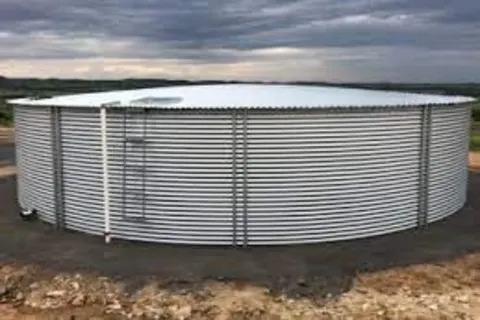
An open or poorly roofed tank loses water to the air. In a hot, dry, windy WA summer that can be several millimetres a day across the whole surface, which on a large diameter tank is a lot of litres even though the level barely appears to move.
A sealed tank with a sound roof and a lid on the hatch loses very little. If your tank is open topped or the roof has holes, some drop is normal and expected. That is a reason to fix the roof, not the liner.
Step 3: run the 24 hour drop test
This is the test that actually settles it.
- Close every outlet from the tank, including reticulation, stock lines and the house supply
- Mark the water line clearly, inside the tank on the wall or on the wall outside, with tape or a pencil mark
- Note the time
- Leave the tank completely alone for 24 hours
- Come back at the same time and measure the drop from your mark
A drop of a few millimetres with a good roof is normal. A drop you can measure in centimetres, with no use, means water is leaving the system. Repeat it over 48 hours if the result is borderline.
Step 4: split the tank from the plumbing
If the test shows real loss, find out whether it is the tank or the pipework. Isolate the tank at the outlet valve closest to the shell and repeat the 24 hour test.
If the level holds with the outlet isolated, the tank is sound and your problem is a buried pipe, a fitting or a valve. That is a plumbing job, not a tank job, and it is usually cheaper.
If the level still drops with everything isolated, the tank itself is losing water.
Step 5: read where the water is going
Once you know it is the tank, the pattern tells you a lot.
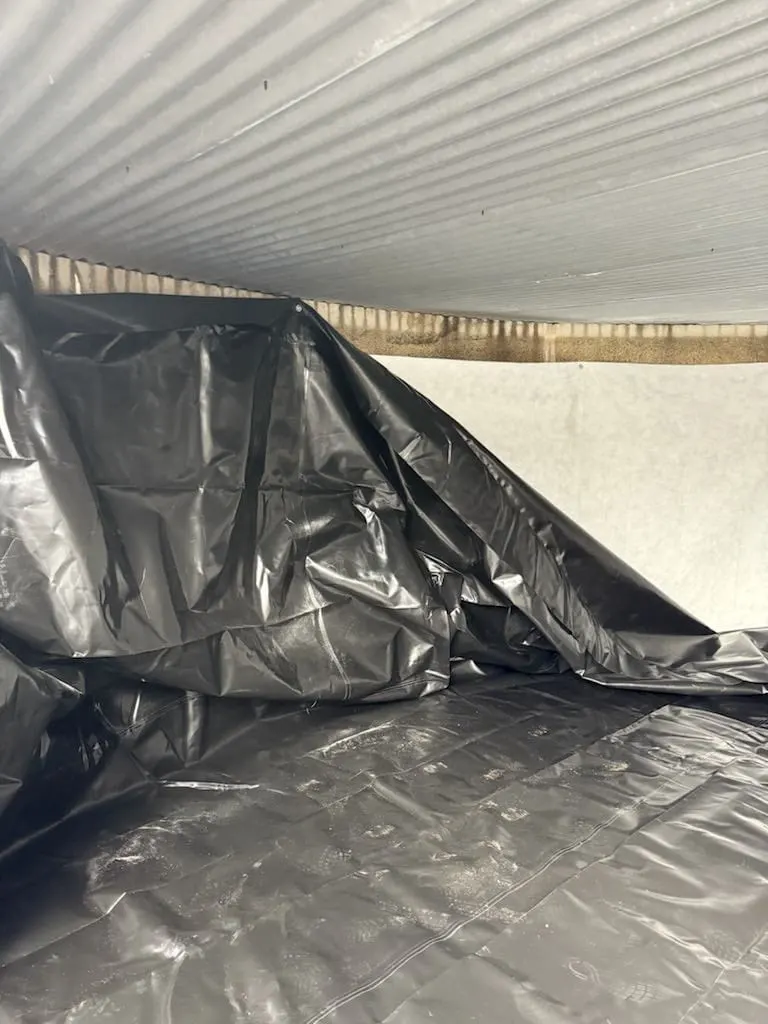
- A wet patch at one point on the base usually means a puncture in the liner near there, often from a tree root
- Damp all the way around the base points at a failed base or a low level breach
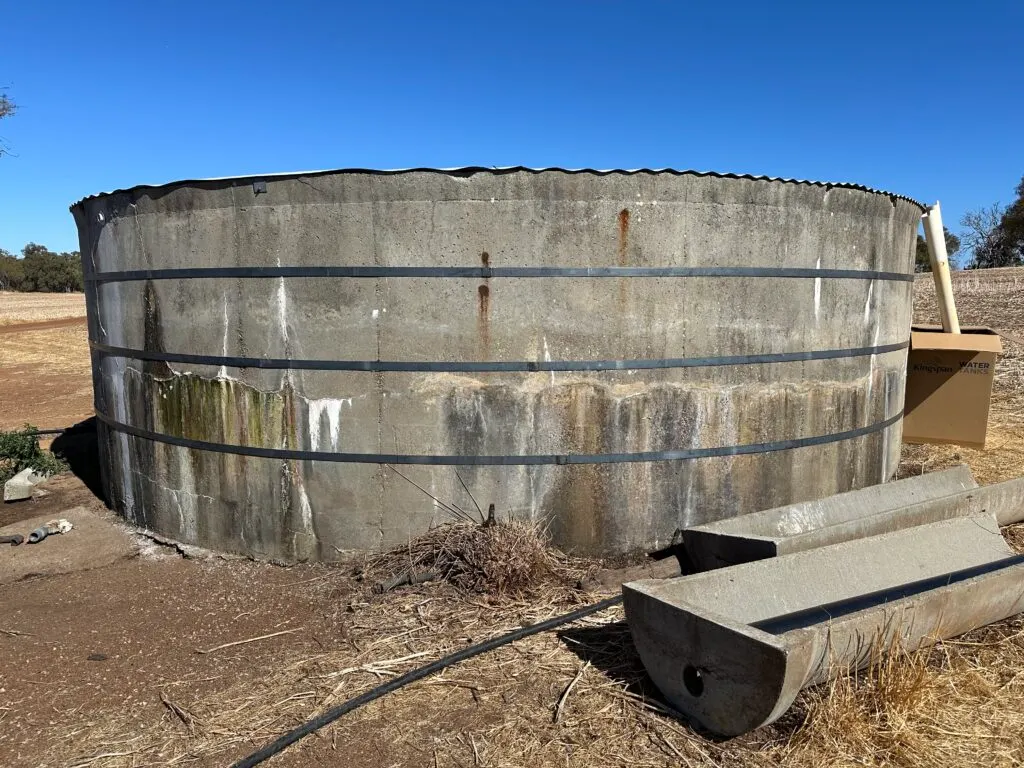
- Water appearing partway up the wall of a concrete tank suggests a crack, and vertical cracking usually means the bands are letting the wall spread
- A level that falls fast at first and then stops at a certain height means the breach is at that height
That last one is genuinely useful. Note the height the level settles at and tell us, because it locates the damage before we even arrive.
What to send us
When you call, have this ready: - Tank diameter and wall height - Material, concrete or steel - The 24 hour drop measurement - The height the level settles at, if it does - Two or three photos, including the base and the outside wall
That is usually enough to quote the job without a site visit, or at least to arrive with the right materials already on the truck.
Dropping levels
COMMON FOLLOW UP QUESTIONS
Still stuck? Call 0499 142 149.
A sealed tank with a sound roof loses very little. An open or holed tank in a hot dry summer can lose several millimetres a day off the surface. If your tank is open, fix the roof before you suspect the liner.
The breach is at the height where it stopped. Water above that point escapes, water below it stays. Measure that height and tell us, it locates the damage.
Rarely. A liner breach is only properly visible from inside, with the tank empty and the liner exposed. The drop test tells you whether draining it is justified.
In most of WA, yes. A few centimetres a day across a large diameter tank is thousands of litres, and in a dry summer that is the difference between having water and carting it.
Next
IF IT IS THE TANK
Get a price
SEND US THE NUMBERS.
Diameter, height, outlets and a couple of photos. That's usually all we need to come back with a firm price. No site visit is needed to start.